

 2 hours ago
5
2 hours ago
5
PROTECT YOUR DNA WITH QUANTUM TECHNOLOGY
Orgo-Life the new way to the future Advertising by Adpathway Wendell Cruz and Matt Marton-Imagn Images
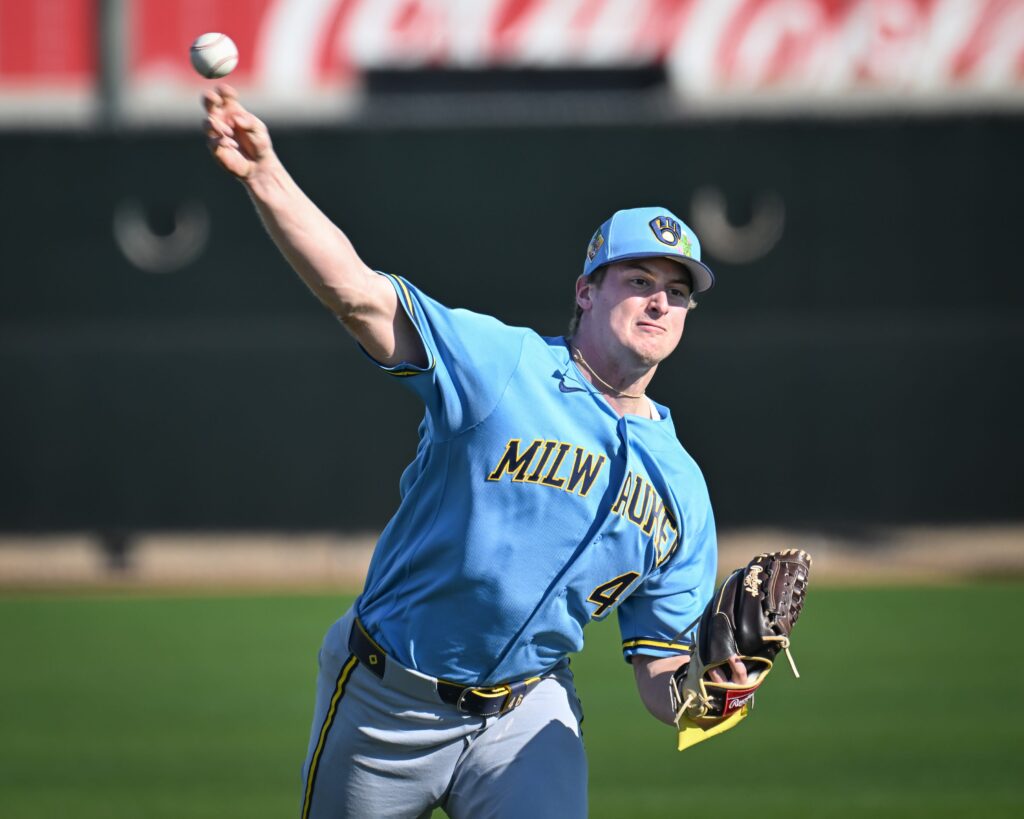
Cam Schlittler brought his A-game on Sunday. Facing the Mets in the rubber game of the Subway Series at Yankee Stadium, the Yankees’ fireballer was nearly untouchable over the course of six scoreless innings, striking out eight while allowing just one hit, a fifth-inning double by Brett Baty. Meanwhile in Baltimore, the Blue Jays’ Dylan Cease worked around five walks to allow just one run over five innings while striking out nine. The two righties are engaged in an intriguing race for the AL Cy Young Award, one that could go down to the wire. The NL race is a tight one as well, with the Brewers’ Jacob Misiorowski the favorite but hardly the only one under consideration.
The 25-year-old Schlittler and 24-year-old Misiorowski are undeniably the frontrunners in their respective leagues, from both statistical and narrative standpoints. They lead in our Tom Tango-modeled Cy Young projections, and as of mid-August, they dominated polls taken by MLB.com. Nonetheless, the statistical races that can influence both our perceptions and voter behavior aren’t entirely decided, and with less than two weeks to go in the regular season, the races are worth a closer look.
The 6-foot-7 Misiorowski and 6-foot-6 Schlittler share similarities beyond their impressive heights. Both are in their first full major league seasons, after arriving in mid-2025 and helping their teams to the playoffs while showing poise beyond their years; this October, they’ll be seasoned postseason veterans. They’re the majors’ two hardest-throwing starters, with Misiorowski breaking velocity records all over the place. His average four-seam velocity — a mind-blowing 100.6 mph — not only leads the majors, but it’s also the fastest single-season velocity by a starter in the pitch-tracking era (from 2008 onward), hardly surprising given that he owns the (scrolling, scrolling, scrolling) 117 fastest pitches by a starter in pitch-tracking history — including a record-setting 105.5-mph heater to the Cubs’ Pete Crow-Armstrong on June 26 — and 353 of the 394 pitches of at least 102 mph thrown by a starter. Hunter Greene is the only other one in double digits (12). Schlittler merely ranks second among all starters this year, with an average velocity of 98.0 mph, which is still good for fifth in the pitch-tracking era.
Both righties have other exceptional offerings that test the adage “man cannot live by fastball alone,” in that Misiorowski’s cutter and Schlittler’s sinker are their second-most valuable pitches according to Statcast. But whatever they’re throwing, they’re dominating. Each leads his respective league in ERA (1.95 for both) and fWAR (6.0 for Misiorowski, 5.9 for Schlittler), with the Yankee additionally leading the AL in starts (31), innings (184 2/3), strikeout-walk differential (25.5%), and bWAR (7.1), and the Brewer leading the NL in strikeouts (236), strikeout rate (38.3%), and FIP (2.24). That ought to be enough to hand out the hardware, right?
Quite possibly, but not all of those statistical leads is insurmountable. Zooming in for a closer look first at the AL, Schlittler and Cease have separated themselves from the pack more so than they have from each other:
AL Cy Young Contenders
| Cam Schlittler | 14 | 6 | 31 | 184.2 | 31.6% | 6.1% | 25.5% | 0.78 | 1.95 | 2.88 | 2.57 | 5.9 | 7.1 |
| Dylan Cease | 11 | 5 | 28 | 166.1 | 35.3% | 10.8% | 24.6% | 0.60 | 2.38 | 2.81 | 2.48 | 5.6 | 6.0 |
| Parker Messick | 11 | 9 | 29 | 172.1 | 26.0% | 6.9% | 19.1% | 0.84 | 2.51 | 3.07 | 3.11 | 4.5 | 5.7 |
| Drew Rasmussen | 14 | 5 | 28 | 160.1 | 25.6% | 4.3% | 21.3% | 0.79 | 2.81 | 3.11 | 2.88 | 4.6 | 3.9 |
| Sonny Gray | 17 | 5 | 27 | 156.2 | 22.0% | 6.6% | 15.4% | 0.86 | 2.76 | 3.84 | 3.46 | 3.2 | 4.0 |
Yellow = leads league (possibly while tied).
I couldn’t fit it in the table, but Schlittler is third in strikeouts (228) behind Cease (236) and Gavin Williams (235), whose run prevention numbers (3.78 ERA, 3.49 FIP) rule him out here. (Dan Szymborski has a closer look at Williams’ breakout coming out later today.) Messick, Rasmussen, and Gray have all authored fine seasons, but none has a compelling enough statistical case to elevate him into the company of the top two; win totals and winning percentage don’t cut it these days. The ability of Schlittler and Cease to miss bats separates them in value from the rest of the group, both via our FIP-driven WAR and Baseball Reference’s version, where they don’t have to share as much credit (or blame) with their fielders given the lower rates of balls in play. More on that subject in a moment.
You Aren't a FanGraphs Member
It looks like you aren't yet a FanGraphs Member (or aren't logged in). We aren't mad, just disappointed.
We get it. You want to read this article. But before we let you get back to it, we'd like to point out a few of the good reasons why you should become a Member.
1. Ad Free viewing! We won't bug you with this ad, or any other.
2. Unlimited articles! Non-Members only get to read 10 free articles a month. Members never get cut off.
3. Dark mode and Classic mode!
4. Custom player page dashboards! Choose the player cards you want, in the order you want them.
5. One-click data exports! Export our projections and leaderboards for your personal projects.
6. Remove the photos on the home page! (Honestly, this doesn't sound so great to us, but some people wanted it, and we like to give our Members what they want.)
7. Even more Steamer projections! We have handedness, percentile, and context neutral projections available for Members only.
8. Get FanGraphs Walk-Off, a customized year end review! Find out exactly how you used FanGraphs this year, and how that compares to other Members. Don't be a victim of FOMO.
9. A weekly mailbag column, exclusively for Members.
10. Help support FanGraphs and our entire staff! Our Members provide us with critical resources to improve the site and deliver new features!
We hope you'll consider a Membership today, for yourself or as a gift! And we realize this has been an awfully long sales pitch, so we've also removed all the other ads in this article. We didn't want to overdo it.
With Gerrit Cole scuffling late in his first season after returning from Tommy John surgery, and Max Fried limited to 18 starts by a bone bruise in his elbow, Schlittler has emerged as the Yankees’ bona fide ace and as one of the league’s true workhorses. Six other AL pitchers have made at least 30 starts so far, but only Michael Wacha has thrown at least 180 innings; he’s at 182 2/3, and while Tanner Bibee (177 1/3), Reid Detmers (174), Williams (174) and a couple others may get there, they won’t catch Schlittler. Nineteen of Schlittler’s starts have been quality starts, the league’s second-highest total behind Wacha (20); Cease is tied for eighth with 15. Schlittler has either put up zeroes or allowed just one run in 22 starts, including each of his last seven. Sixteen of those zero-or-one-run starts have lasted at least six innings; Gray and Rasmussen are among those tied for second with 13, while Cease is tied for sixth with 12. Beyond the aforementioned categories in which he’s led the league, Schlittler is second to Cease in FIP and xERA by less than one-tenth of a run, with the third-highest strikeout rate and sixth-lowest walk rate.
Cease, whom the Blue Jays signed to a seven-year, $210 million deal this past winter, has bounced back from an uneven 2025 performance with the Padres, one in which he put up a 4.54 ERA and a 3.56 FIP. He’s been every bit as good as the Blue Jays could have hoped for, something that can’t be said for many players on the defending AL champions. He has totaled seven starts of at least six innings with zero runs allowed, tied for third in the majors behind Cristopher Sánchez (10) and Rasmussen (eight); Schlittler is tied for seventh with six.
Cease has been the most unhittable starter in the AL, with the lowest batting average allowed (.177) and fewest hits per nine (5.68). He chalked up the first no-hitter of his career in 2024 while pitching for the Padres, and has flirted with a second one on a couple occasions this season. He tossed eight hitless innings on July 8 against the Giants at Oracle Park before allowing a single to Heliot Ramos to start the ninth, at which point he departed, having thrown 118 pitches in what was by then a 10-0 rout; days later, he was named to start the All-Star Game for the AL. He pitched 6 2/3 hitless innings against the Yankees on August 22 in the Bronx before allowing back-to-back singles to Jazz Chisholm Jr. and Austin Wells, and additionally threw a one-hit shutout against the Red Sox at Fenway Park on July 25, with a fifth-inning double by Andruw Monasterio the lone blemish.
Both Schlittler and Cease have averaged a hair under six innings per start (5.96 for the former, 5.94 for the latter). The difference in innings totals comes down to Cease’s having spent 15 days on the injured list for a mild hamstring strain starting in late May.
Cease has the higher strikeout rate, but also the higher walk rate — the highest among AL qualifiers, in fact — but even with that, his FIP and xERA are slightly better than Schlittler’s. Those estimators are defense-independent, but it’s worth noting the defenses behind the two pitchers. Statcast, which tracks the individual Fielding Run Values accumulated behind each pitcher, shows Cease with slightly more support, with his fielders putting up 7 FRV behind him compared to 5 FRV for Schlittler. The bWAR calculations, which start with actual runs allowed per nine innings with a variety of adjustments for defense, opposing offenses, and park factors, credit Cease with having the better defense behind him (based on team-level Defensive Runs Saved), worth 0.24 runs per nine to Schlittler’s 0.09 runs per nine. In other words, by that reckoning Cease shares more credit with his fielders, though that difference is canceled out by adjustments for his facing better offenses and pitching in a higher-scoring environment.
In the end, Schlittler’s combination of superior run prevention, better peripherals, and a larger innings load separates him from Cease by 1.1 bWAR and 0.3 fWAR. Depending upon where you fall on the spectrum of factoring in defense, it’s somewhere between a narrow margin and a substantial one, but either way it lines up with the consensus. Barring a blowup over his final couple of starts, Schlittler looks like the right call for the AL Cy Young.
The NL race isn’t as clear-cut:
NL Cy Young Contenders
| Jacob Misiorowski | 14 | 5 | 27 | 161.1 | 38.3% | 6.7% | 31.7% | 0.78 | 1.95 | 2.10 | 2.24 | 6.0 | 5.6 |
| Cristopher Sánchez | 17 | 5 | 30 | 187.1 | 27.0% | 5.4% | 21.6% | 0.77 | 2.79 | 3.31 | 2.72 | 5.8 | 7.6 |
| Chris Sale | 14 | 9 | 26 | 157.0 | 30.3% | 4.9% | 25.4% | 0.52 | 2.18 | 3.05 | 2.29 | 5.7 | 5.5 |
| Jesús Luzardo | 14 | 5 | 29 | 178.2 | 29.4% | 8.8% | 20.7% | 0.76 | 2.87 | 2.85 | 2.78 | 5.5 | 6.4 |
Yellow = leads league (possibly while tied).
On a pure rate basis, the numbers favor Misiorowski. Not only does he lead the NL in the half-dozen categories highlighted above, but he’s been even more unhittable than Cease, with a .155 batting average allowed and 4.91 hits per nine given up, both tops in the majors among qualifiers. But because he’s worked in a six-man rotation all season long, and has been kept on a slightly shorter leash — averaging 5.97 innings per start to Sale’s 6.04, Luzardo’s 6.14, and Sánchez’s 6.24 — he has thrown 26 fewer innings than Sánchez.
The results have generally been dazzling. Misiorowski has 10 starts with double-digit strikeout totals, second in the majors only to Williams; Cease has nine, Luzardo six, Sánchez five, Sale and Schlittler four. The Miz has six scoreless starts of at least six innings, including a 15-strikeout one-hit shutout against the Phillies on June 12, marred only by a fourth-inning Kyle Schwarber single. But even with a majors-leading 236 strikeouts, the innings total puts him at a slight disadvantage in some contexts. Misiorowski is tied for fifth in the league with 18 quality starts, with Sánchez tied for second (20) alongside Yoshinobu Yamamoto, one behind Sandy Alcantara; Sale is fourth with 19, Luzardo tied for ninth with 17. Misiorowski’s total of 11 starts of at least six innings with no more than one run allowed trails Sánchez (13), as well as Luzardo and Sale (12 apiece).
Sánchez has the volume advantage. Working with a sinker that averages “only” 95.0 mph — offset by one of the game’s best changeups — he’s reached the 200-strikeout plateau for the second consecutive season; his 212 ranks third behind Misiorowski and Luzado (221). His strikeout rate ranks seventh, his walk rate third, his strikeout-walk differential fourth, behind Misiorowski, Sale, and Luzardo in that order. He made a huge impression earlier this season by reeling off a streak of 50 2/3 scoreless innings in May, the longest ever by a lefty, and the fifth longest of all time; not since Orel Hershiser’s 59-inning streak in 1988 broke Don Drysdale’s record had anyone reached 50. That streak helped Sánchez land the honor of starting the All-Star Game for the NL, though Misiorowski’s workload — he was scheduled to start on the Sunday before the game, officially ruling him out for the honor, and then was scratched from that outing due to arm fatigue — played a part. Even then, Sánchez’s 2.62 ERA was a full run per nine higher than Misiorowski’s. On that note, Sánchez has a 3.15 ERA and a 3.46 FIP since the break, though by FIP (2.70 before, 2.77 after), he’s been basically the same pitcher, and even his xERAs (3.24 before, 3.46 after) are closer than his actual ones.
The 37-year-old Sale has thrown even fewer innings than Misiorowski because he’s been given some extra rest between starts. It’s a choice that’s paid off handsomely for the Braves and for the pitcher, who cracked 100 mph on a pitch on August 27, his fastest since 2018, and who has been positively brilliant in the second half, with a 2.14 ERA and a 1.41 FIP, the latter thanks to a combination of a 32.6% strikeout rate, a 2.7% walk rate, and 0.15 homers per nine.
According to Statcast, Sale has gotten the best defensive support of this quartet at 5 FRV, ahead of Sánchez (3), Misiorowski (0), and Luzardo (-3). That defense has helped to offset Sale’s having an xERA almost a run higher than the Miz. The two are on nearly even footing in the grand scheme, but based on their performances to date, I don’t see anything that would elevate Sale past Misiorowski except some sentiment for the old guy, a likely future Hall of Famer.
As for Luzardo, there’s not much separating him from Sánchez. Though his season hasn’t been as eye-catching, it’s been stellar, but in the wake of his two-hit, 12-strikeout shutout against the Braves on September 7, he’s dealt with shoulder stiffness and inflammation. Thanks to a clean MRI, he’s avoided the injured list so far, though he did have a turn skipped, and it wouldn’t be surprising if his workload between here and October is dialed down.
The two Phillies have had to survive playing in front of the team’s notoriously lousy defense. Sánchez has the highest BABIP among NL qualifiers (.335), 41 points ahead of the seventh-ranked Luzardo (.294) and 101 points ahead of Misiorowski (.234). Where Statcast tracks the individual FRVs behind each pitcher, Baseball Reference’s WAR adjustments are at the team level, which may be heavy-handed for pitchers who differ in groundball/fly ball orientation. Sanchez’s 58.2% groundball rate leads the league, while Luzardo’s 48.3% is seventh; both are more dependent upon the team’s shaky infield than its more middling (but still not good) outfield. In the bWAR calculations, there’s about half a run per nine difference between those two (-0.24 for Luzardo, -0.26 for Sánchez) and the other pair (0.24 for Misiorowski, 0.27 for Sale). The latter duo also gets favorable adjustments for pitching in tougher ballparks (which are tracked individually). The adjustments give the two Phillies the higher bWARs, with Sánchez having the edge.
I think the overall choice comes down to Sánchez’s advantage in volume versus Misiorowski’s edge in dominance, and for some voters or otherwise interested observers, that steers it into subjective and/or aesthetic territory. I can understand favoring the guy at the vanguard of extreme velocity — not just because of the raw velo, but also for what he’s done with it in terms of unhittability and sheer brilliance — but I can also appreciate the impulse to reward a throwback, particularly one working under the adverse conditions of being backed by Trea Turner (-16 DRS, -10 FRV) and Alec Bohm (-8 DRS, -5 FRV). Based on their numbers to this point, I’d vote Misiorowski, but I’d hardly blame anyone for choosing Sánchez. Nevertheless, I suspect his second-half fade has probably doomed him to another second-place finish.









 English (US) ·
  French (CA) ·