

 21 hours ago
1
21 hours ago
1
PROTECT YOUR DNA WITH QUANTUM TECHNOLOGY
Orgo-Life the new way to the future Advertising by Adpathway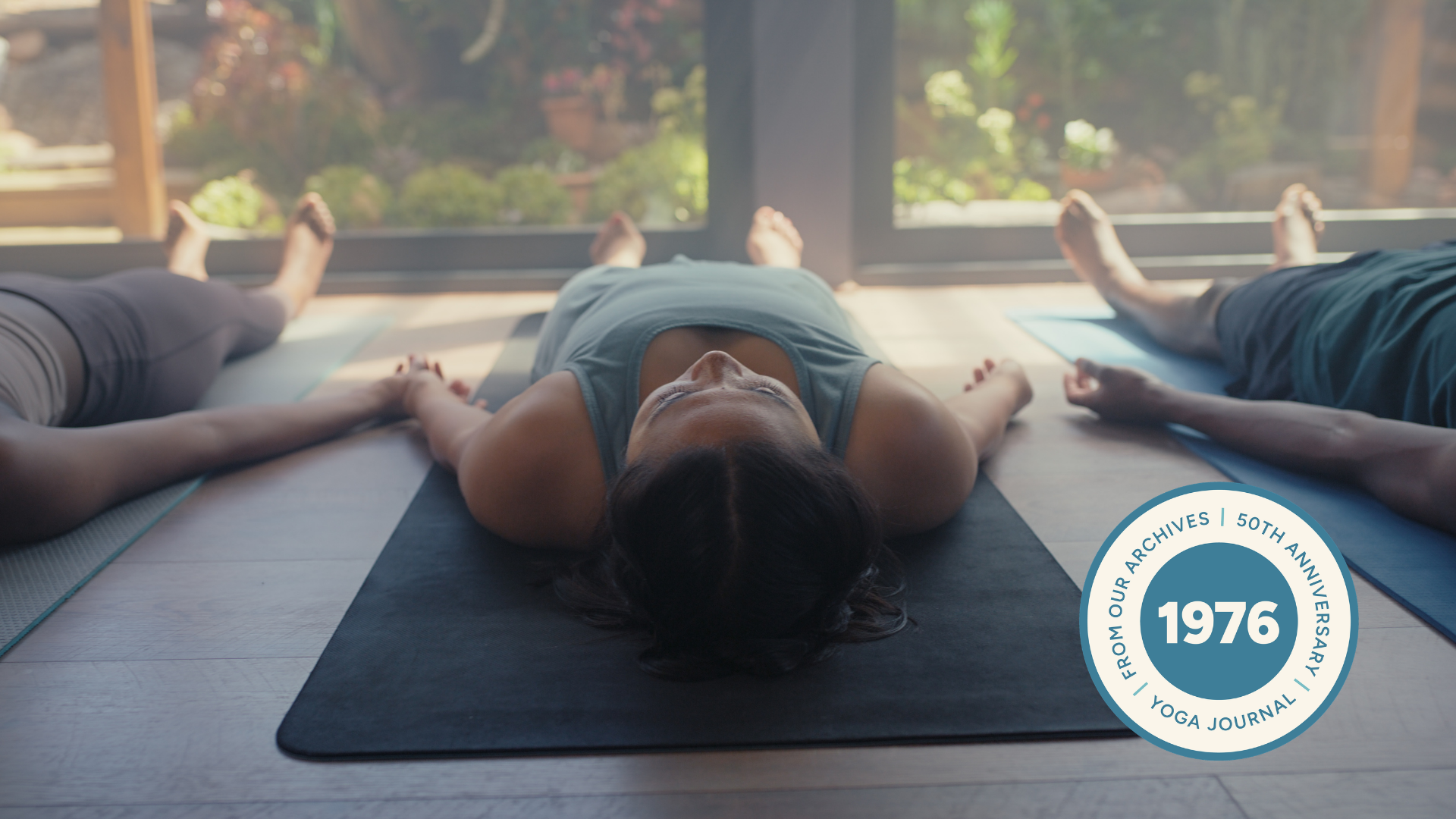
(Photo: Canva)
Published August 30, 2026 06:52PM
In Yoga Journal’s Archives series, we share a curated collection of articles originally published in past issues beginning in 1975. This article about Savasana (Corpse Pose) first appeared in the November-December 1976 issue of Yoga Journal. Find more of our Archives here.
Said to be the most difficult asana or pose to practice correctly, Savasana is at the core of the practice of yoga. This is true for several reasons. First, it allows the practitioner to follow the practice with a period of integration; the knowledge which has been gained by the preceding poses is taken into and becomes part of the person’s being.
Secondly, this asana allows the students a period, probably unique in the day of most Americans, to do nothing but experience the present moment with its sensations, thoughts, and bodily feelings. This perception of the moment as it is, with no judgment or interpretation, is the beginning of meditation. The practice of Savasana thus allows the beginning student of yoga, as well as the more advanced one, to experience a moment of internal silence.
Another unique thing about this asana is that it allows the individual the chance to become aware of the internal processes of the body and the mind. Through the regular practice of Savasana, the student can become aware of the more subtle aspects of physical existence. This might begin with the student becoming aware of the heart beat, continue with an awareness of the pulse in various parts of the body, and end with the experience of the difference of timing of the pulse on the left and right sides of the body caused by the function of the circulatory system. This gradual increase in subtle awareness leads the practitioner into deeper and deeper contact with the internal processes. The ability to tune in to one’s internal balance or imbalance seems to be one of the clues to the maintenance of health and even perhaps to self-healing.
Learning Savasana is like learning most other things in life. Just as a baby must consciously think about walking and adults do this activity automatically, the novice of Savasana might find it difficult to relax. Often if one is told to “relax” on command, it becomes even harder to do so, much as it is impossible to not think of something someone has just told you to not think about. As the practice of Savasana continues as part of a well-rounded yoga practice, it becomes more natural. What was first a conscious attempt at relaxation filters down from the conscious mind to the unconscious. What we call learning has occurred and the process of relaxation becomes not just automatic during the practice of Savasana, but hopefully it becomes part of the entire day’s response to stress. Thus the asana can cause beneficial physiological changes not only during the time of its practice, but also during the rest of the day when one is not necessarily thinking of Savasana at all.
The mental aspects of Savasana are also important. At first when one attempts this period of relaxation, usually from 10 to 15 minutes long, the mind seems to run rampant to everything but the moment. This is what prompted Swami Vivekananda, follower of the famous Sivananda of Rishikesh, India, to call the mind a “drunken monkey.” As practice of Savasana is continued over time, the mind becomes a servant of the will, and thus can become a positive force in the evolution of the individual toward health and peace. This asana can be a valuable tool in bringing about the awareness of the mind’s wavering, which is the first step toward allowing that wavering to cease.
Finally, the name of the pose itself means “corpse” in Sanskrit, a name which is often misunderstood. The student assumes the outer form of the corpse yet the mind is not dull but rather watching the flow of sensations and thoughts without attachment. The student becomes “dead” to the old and thus prepares a way for the new to be born within, the new of calmness, self-awareness, and harmony. The student who practices Savasana with regularity is said to also be practicing the ultimate surrender of death, so that that transition is not feared and misunderstood. So Savasana is preparation for the moment, preparation for the stresses of life, and preparation for the final transition from life to death.
The author gratefully acknowledges her teacher B.K.S. Iyengar and his book Light on Yoga in the writing of this article.









 English (US) ·
  French (CA) ·